
Your Next Crisis Will Probably Start at a Company You've Never Heard Of
"Why resilience depends less on what happens inside your organization and more on what happens across the network of companies, infrastructure, and services you rely upon every day."
Introduction
Most crisis management plans focus on threats within the organization's own walls: cyber attacks, safety incidents, product failures, or operational disruptions.
Yet many of the most disruptive events organizations face today originate elsewhere: A software supplier is hacked, a logistics provider faces capacity issues, a drought lowers river levels, a key manufacturer on another continent experiences a power outage.
The crisis begins somewhere else à The impact arrives at your doorstep.
The uncomfortable reality is that many organizations understand their own risks far better than they understand the risks embedded within their supply chain.
The Hidden Nature of Modern Crises: The supply chain is no longer linear
For many organizations, the supply chain consists of:
- Suppliers
- Subcontractors
- Logistics providers
- Utility providers
- Software vendors
- Cloud service providers
- Communication networks
- Financial service providers
Most organizations only have visibility of the first layer. The real vulnerability often sits three or four layers deeper.
A disruption becomes your crisis
The key lesson for crisis managers is simple: You do not need to cause an incident to suffer its consequences. When a critical supplier fails, stakeholders rarely distinguish between causes and consequences:
- Customers still expect deliveries.
- Employees still expect answers.
- Regulators still expect compliance.
- The media still expects a response.
Case Example: Low River Levels and Inland Water Transport; the drought nobody controls
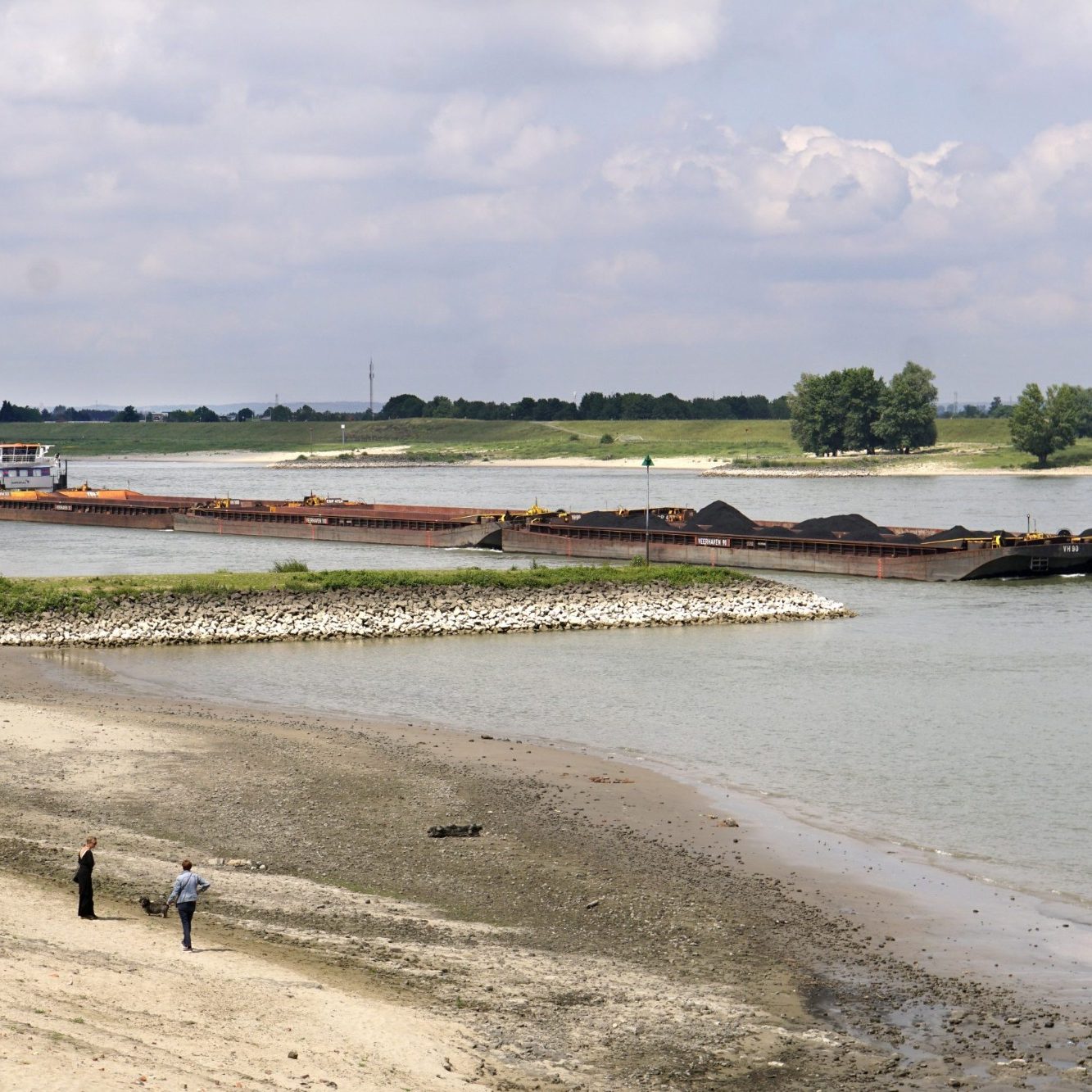
The current prolonged dry weather across parts of Europe offers an excellent example of a supply-chain-driven disruption.
No individual company caused the lack of rainfall. No crisis team can make rivers rise, yet low water levels can significantly affect inland shipping operations:
- Barges may need to operate with reduced loads to avoid grounding.
- Transport capacity decreases.
- Transportation costs increase.
- Delivery schedules become less predictable.
Industries dependent on bulk transport such as chemicals, energy, construction, manufacturing and agriculture may all experience consequential impacts.
The disruption occurs in the transportation system à The crisis emerges inside the organization.
What makes this a crisis management issue?
Many organizations initially view such events as an operational problem, but prolonged disruption can quickly evolve into a strategic crisis.
Questions emerge:
- Can production continue?
- Are alternative routes available?
- Will contractual obligations be met?
- How are customers affected?
- What secondary impacts can be expected?
This is where crisis management becomes essential: Operational disruption creates uncertainty. Uncertainty drives strategic consequences.
Looking through the PEAR.RL lens
One of the most effective ways to assess supply chain disruptions is through the PEAR.RL impact framework.
P - People
Questions to consider:
- Are employees facing increased workload?
- Are transport crews operating under additional pressure?
- Will delayed deliveries impact customers' own operations?
- Could supply shortages create safety issues?
A logistics disruption may not initially seem people-focused, but human consequences are often the first impacts to emerge.
E - Environment
Alternative transport solutions can generate environmental consequences.
For example:
- Increased road transport
- Additional emissions
- Greater fuel consumption
- Temporary storage requirements
Organizations may find themselves making trade-offs between operational continuity and sustainability targets.
A - Assets
Supply chain disruptions frequently affect physical assets.
Examples include:
- Idle production facilities
- Congested storage areas
- Underutilized equipment
- Inventory shortages
- Excess stock in the wrong locations
The problem is often not a lack of assets, it is having the right assets in the wrong place.
R - Reputation
Stakeholders generally see outcomes rather than root causes. Customers may not care whether delays were caused by:
- Drought
- Port congestion
- Supplier failure
- Transport shortages
They experience only one reality: The promised delivery did not arrive.
Organizations that communicate effectively often protect their reputation even when they cannot control the disruption itself.
R - Revenue
Revenue impacts can appear quickly:
- Delivery delays
- Lost sales
- Contract penalties
- Increased logistics costs
- Reduced production capacity
Many supply-chain disruptions start as a cost issue and evolve into a revenue issue.
L - Legal & Liability
Legal exposure frequently increases when disruptions become prolonged.
Potential issues include:
- Contractual obligations
- Service-level agreements
- Force majeure discussions
- Regulatory compliance
- Reporting requirements
An event that began as an environmental condition may ultimately become a legal issue.
Applying PEAR.RL to Supply Chain Disruption
The source of a disruption does not determine its impact.
A drought, cyber attack, port closure, supplier bankruptcy or infrastructure outage may look completely different at the source, but inside the affected organization the impacts often emerge in remarkably similar ways.
PEAR.RL Element
Example Impact from Low River Levels
People
Increased workload, overtime, planning pressure
Environment
Shift to road transport, increased emissions
Assets
Inventory imbalances, idle production equipment
Reputation
Customer dissatisfaction due to delayed deliveries
Revenue
Increased logistics costs and reduced output
Legal & Liability
Contractual penalties and SLA breaches
Recent Examples of Supply Chain Disruptions
The past few months have provided multiple examples of organizations feeling the effects of disruptions that originated outside their own operations.
1. Cyber Attacks Against Suppliers and Service Providers
Several significant cyber incidents reported during May and June 2026 affected organizations ranging from manufacturers and pharmaceutical companies to utilities, software providers and public institutions. Analysts highlighted a common theme: attackers increasingly target interconnected suppliers and service providers, creating downstream consequences for customers and business partners.
For many organizations, the question is no longer:
"Can we prevent a cyber attack?"
But rather:
"What happens when a supplier, software vendor, logistics partner or cloud provider is attacked?"
A vulnerability in somebody else's network can quickly become your operational disruption.
2. Software Supply Chain Vulnerabilities
Security researchers reported a series of software supply-chain incidents during May 2026 involving hosting infrastructure, software repositories and widely used technology platforms. The incidents demonstrated how weaknesses introduced in a shared supplier ecosystem can affect hundreds or thousands of dependent organizations simultaneously.
Many companies may not even know they rely on the affected technology until systems stop functioning.
This illustrates a common crisis management challenge:
Organizations often understand their direct suppliers but have limited visibility of technology dependencies several layers deeper.
3. Drought and Low River Levels Affecting Inland Shipping
Not all supply-chain crises originate from malicious actors. Prolonged dry weather and low river levels can significantly impact inland water transportation networks.
When rivers become difficult to navigate:
- Barges may carry smaller loads.
- Transport capacity decreases.
- Delivery times become less predictable.
- Logistics costs increase.
- Alternative transport modes become necessary.
A company that depends on raw materials transported by inland waterways may suddenly face supply shortages despite having no failure within its own operation. The disruption occurs in the transport network. The business impact occurs inside the organization.
This is a perfect example of why crisis managers must monitor external developments, not just internal risks.
4. Critical Infrastructure Dependencies
Recent cyber incident reporting shows repeated attacks against utilities, government systems and essential service providers. These events highlight how companies increasingly depend on external infrastructure that they neither own nor control.
Examples include dependence on:
- Electricity providers
- Telecommunications networks
- Cloud services
- Transportation networks
- Water infrastructure
When one of these systems experiences disruption, the effects can cascade rapidly across entire sectors.
What crisis teams should be asking
Supply chain resilience is not simply about identifying suppliers.
It is about understanding dependencies.
Crisis teams should regularly ask:
- What critical activities depend on external organizations?
- Which suppliers represent single points of failure?
- How far beyond Tier-1 suppliers do we have visibility?
- What external developments could simultaneously affect multiple suppliers?
- Which disruptions could create significant PEAR.RL impacts?
- Are we monitoring indicators that provide early warning?
Conclusion
The next major crisis your organization faces may not originate from a cyber attack, industrial accident, or operational failure within your company. It may begin with a logistics provider, a software vendor, a utility operator, a weather event, or a supplier you've never even met.
Modern crisis management is no longer focused solely on protecting the organization from its own failures.
It is about understanding the interconnected ecosystem on which the organization depends.
Because in today's environment, your crisis may start somewhere else, but the consequences will still arrive at your door.
"Your organization may never meet the company that triggers your next crisis. But you will certainly experience its consequences. Resilience begins not with understanding your own operations, but with understanding the network of dependencies that makes those operations possible."